
AI is now part of everyday operations at recovery facilities, and facilities that use real-time data to drive decisions become 10 to 30% more efficient. But the market has changed quickly: most sorting equipment makers now sell their own AI, several AI specialists are now owned by one, and systems that look alike can measure very different things.
Our updated AI buyer’s guide helps operators of materials recovery facilities (MRFs) and plastics recovery facilities (PRFs) compare vendors with confidence. Here is a summary of the four steps it covers.
|
THE SHORT ANSWER To choose AI waste analytics for a recovery facility, work through four steps:
|
Waste intelligence vs AI for sorting
Both are sold as AI, but they do different jobs. AI for sorting controls one machine, such as a robot or optical sorter. Waste intelligence measures material across the whole plant, from infeed to residue, and turns it into data your teams can act on. Read more on the difference.
|
AI for sorting |
Waste intelligence |
|
|---|---|---|
|
Coverage |
One point on the line |
Every line, infeed to residue |
|
Measures |
Object counts |
Mass and composition |
|
Independence |
Tied to the equipment vendor |
Independent of any vendor |
Step 1: identify your requirements
Start with your business needs, not the vendor’s offer. Decide what you need waste data for, then how you will measure success. OEE (availability × performance × quality) and yield in tonnes give you a common language across operations, maintenance and commercial teams. The return can be significant: one US site saved more than £1.5 million in one year, and another facility saves around £76,000 a year by automating manual audits. The guide covers how to weigh cost against return, and you can estimate the value for your facility with our calculator.
Step 2: run a practical assessment
Look beyond installation. Two questions now carry as much weight as the hardware: is the analytics provider independent of your equipment suppliers, and has a regulator accepted its data? When the company that supplied your sorters also supplies the analytics that judge them, it is marking its own homework. And automated sampling records are not the same as data accepted for statutory reporting.
|
“Now I can trust the data, whereas before Greyparrot I couldn’t.” Pedro Faraldo García, Senior Technical Manager, FCC Environment (RWM 2026 panel) |
Step 3: run a technical assessment
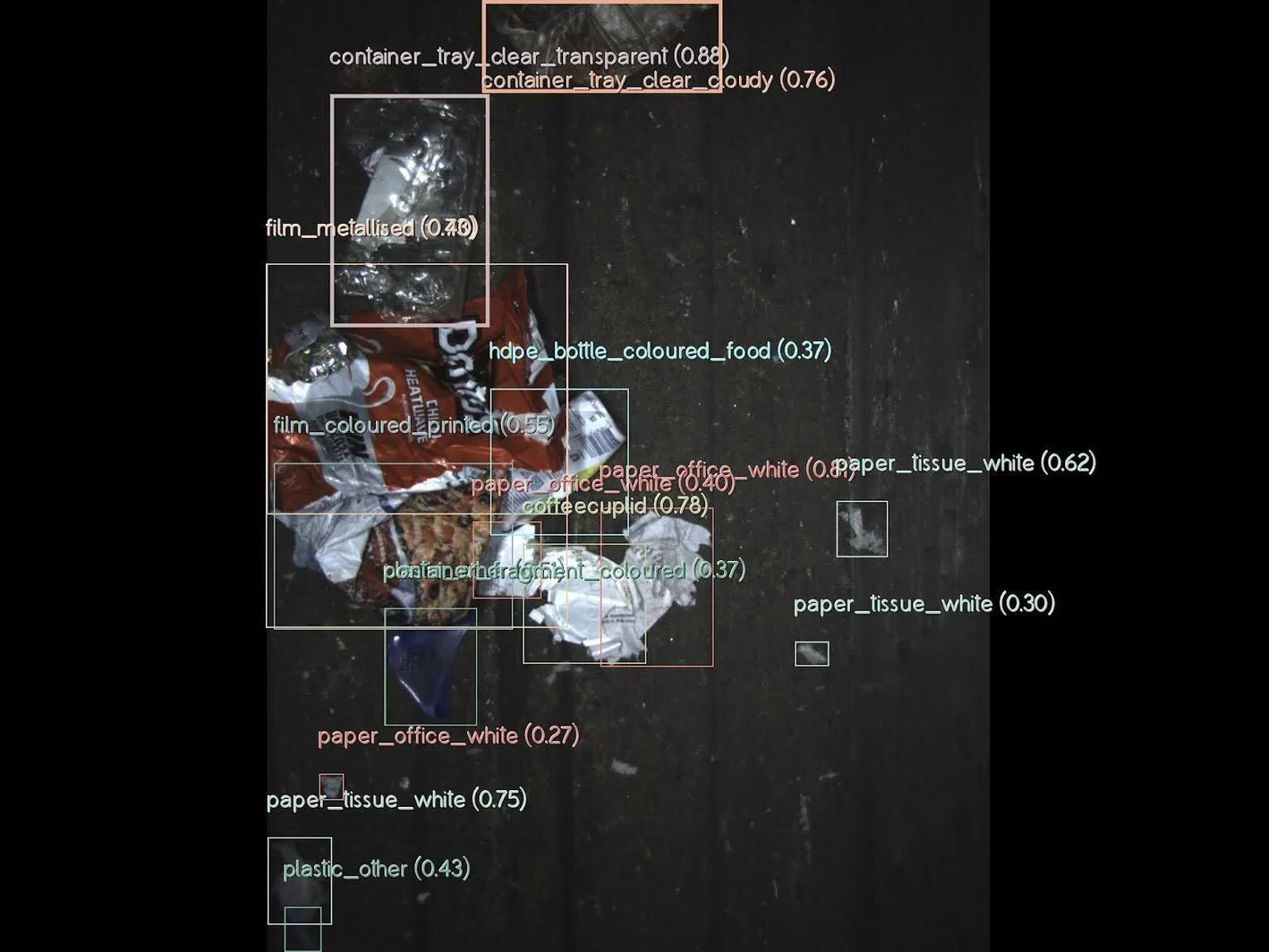
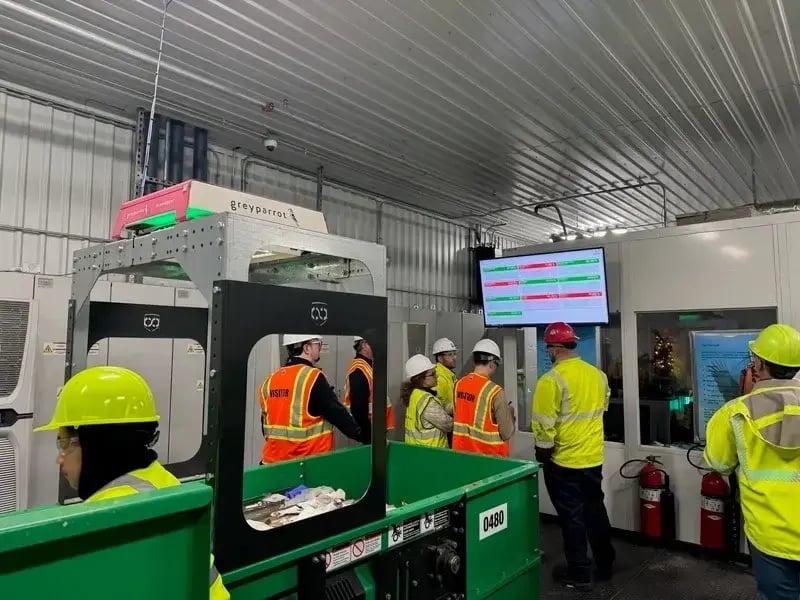
Test taxonomy fit rather than headline category counts, and ask whether the system measures mass across the whole facility or only counts objects at one point. Recovery, bale value and compliance are all decided in tonnes. Check how the data reaches the people who act on it, too: a live alert view on the sorting floor should flag contamination, blockages and purity drops as they happen. The guide sets out the accuracy benchmarks to hold every vendor to.
Step 4: check business alignment
You will have an ongoing relationship with your vendor, so look at ownership, business model, proof and support. Watch how scale is reported too: some headline figures include robots and sorters, or count training images rather than live detections. The guide includes a 12-question checklist for vendor meetings.
Frequently asked questions
What is waste intelligence?
Waste intelligence uses AI-powered computer vision to measure the composition and mass of material across a recovery facility, and turns that data into decisions for operations, maintenance and commercial teams.
Why does mass matter more than item counts?
Recovery rates, bale value, residue costs and compliance reporting are all calculated in tonnes. Item counts show how many objects passed a point, not how much material or value was recovered or lost.
How much time does AI save on manual sampling?
Checking 15 tonnes of waste used to take around 375 hours of manual counting. With AI-powered monitoring, the same check takes around six hours, and it monitors the line continuously rather than relying on a small sample.
Can AI waste analytics data be used for compliance reporting in the UK?
Yes. In Q1 2026, the Environment Agency accepted Greyparrot AI-derived composition data for statutory compliance reporting, in submissions from FCC Environment and Biffa.
|
DOWNLOAD THE FULL BUYER’S GUIDE Get the complete 2026 AI buyer’s guide Everything you need to run a vendor evaluation:
|