In short
Amcor’s Leamington Spa site combines CleanStream® recycling technology with eight Greyparrot Analyzers to improve the recovery of household polypropylene. Full-line data helped identify material losses, inform an 18-month sortation-plant redesign and support daily optimisation. Amcor reported a 12% yield improvement in the first half of 2026 compared with the same period in 2025.
12%
Yield improvement
January–June 2026 vs January–June 2025
300+ tonnes
Additional tonnes of FDA-approved recycled material since the start of 2026
from real-time monitoring and process optimisation.
0.6%
More PP in incoming feedstock
Year-on-year improvement. this represents more than 200 additional tonnes of PP available for processing.
What challenge was Amcor facing?
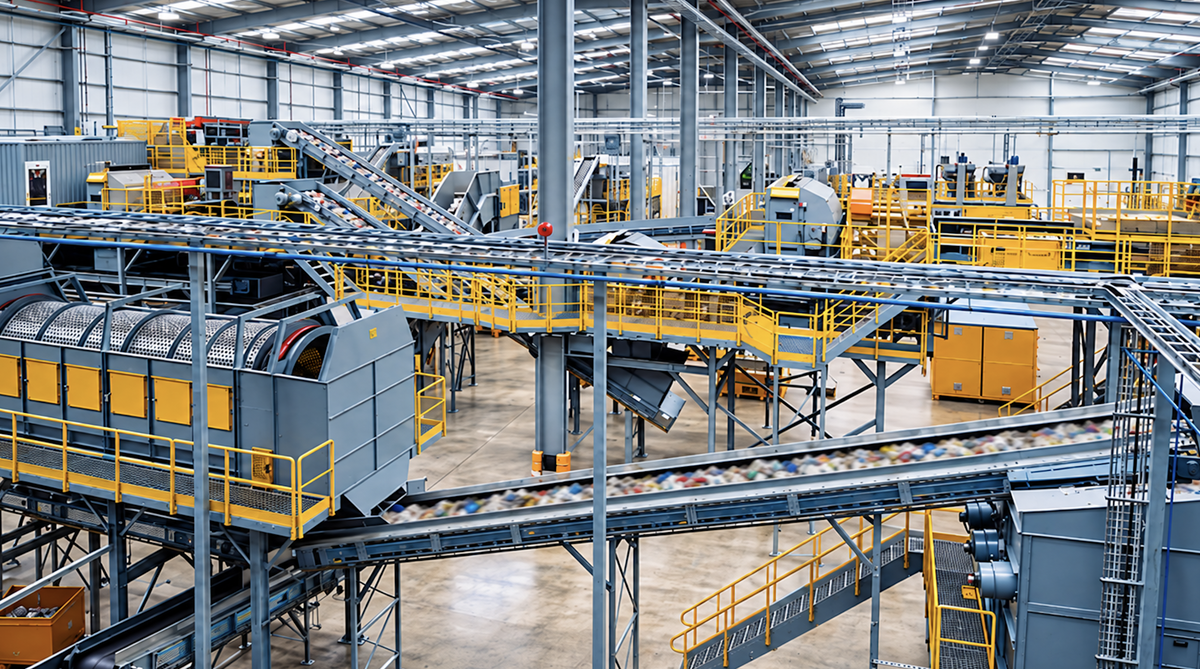
Amcor's site in Leamington Spa processes 50,000 tonnes of UK kerbside-collected polypropylene a year, enough to recycle nearly 40% of the UK’s household PP.
The site reprocesses household polypropylene into an FDA-approved, food-grade pellet. It also produces mixed-colour pellets sold as “Jazz”. The process is designed to reduce the loss of post-consumer PP into lower-value applications.
Once the line had stabilised, the focus shifted from throughput to quality: recovering the right material consistently, not just moving more material through the plant.
“We started out focused on whether we could actually get the throughput. Now we can run stably, and what we need to focus on is quality. Can we make food grade, consistently?”
Sophie Lerway
Performance Improvement Director, Amcor
How did Amcor use waste intelligence at Leamington Spa?
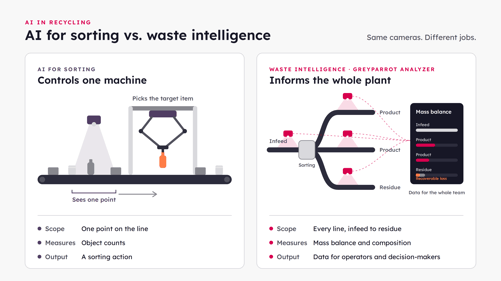
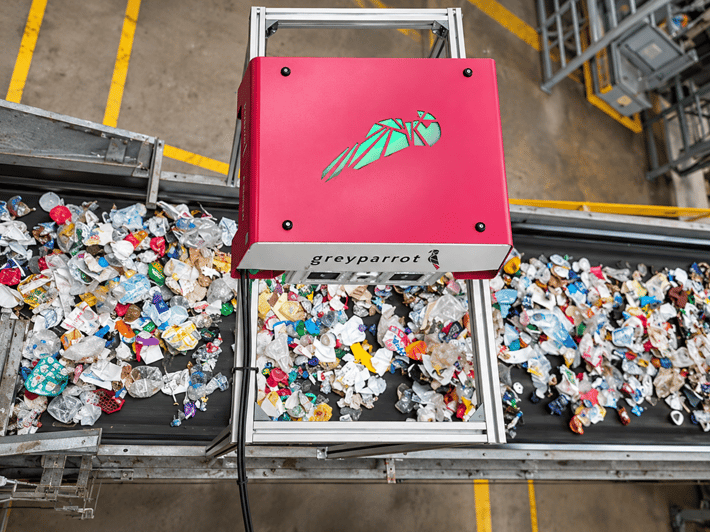
Amcor added a layer of digital analytics to its existing sorting infrastructure. Working alongside Amcor’s CleanStream® recycling technology, Greyparrot Analyzer provides visibility into material flows to help teams measure and optimise polypropylene recovery. Greyparrot Analyzers report processed volumes, yields and quality indicators in real time, so operators can measure performance at each stage and adjust sorting programmes on objective data.
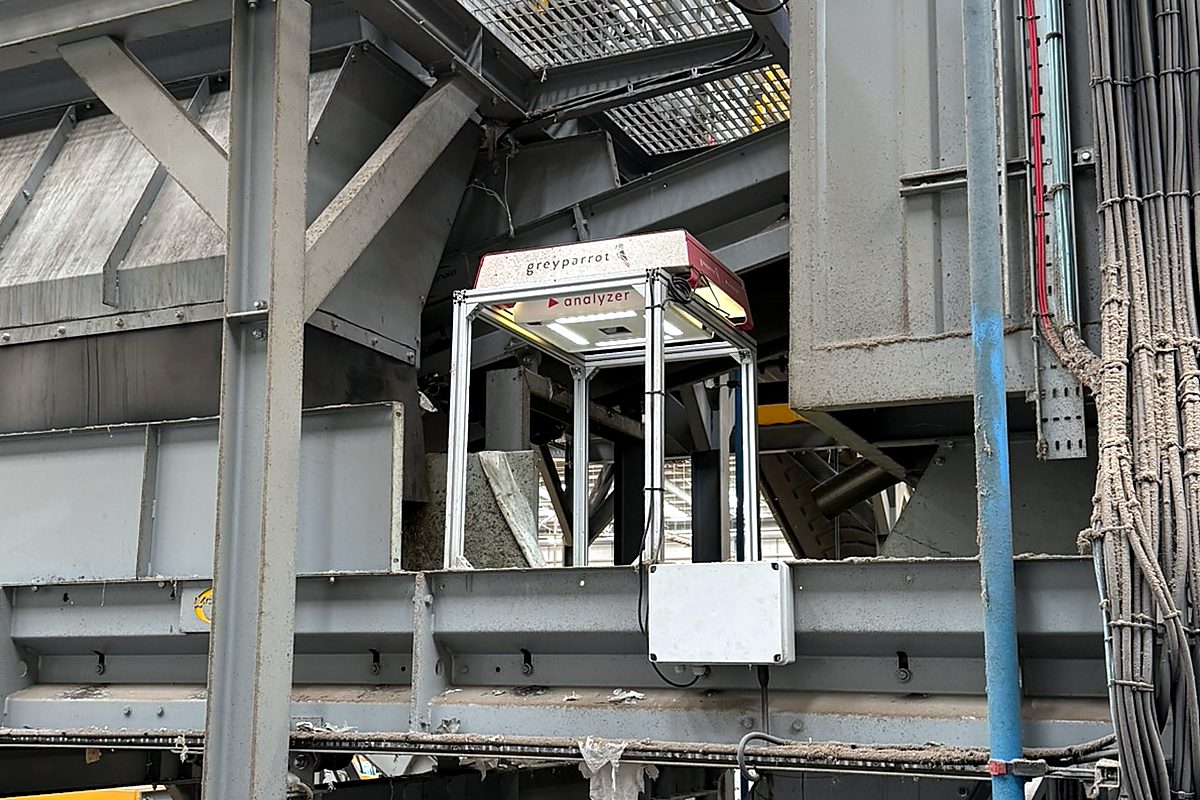
Amcor and Greyparrot began by installing four Analyzers in 2024 to independently measure sorting performance and track material flows. Following the insights gained, they doubled coverage to eight Analyzers, providing a full-line view of the sorting process.
Today, operational teams use this real-time data to monitor contamination, identify bottlenecks and optimise performance as the site works towards full production capacity.
How did full-line data support the 12% yield improvement?
The Analyzer data showed where target material was being lost into the reject stream, and at which point on the line. That insight fed an 18-month redesign of the sortation plant.
If I compare the first six months of this year to the first six months of last year, there's a 12% improvement in our yield.”
Sophie Lerway
Performance Improvement Director, Amcor
Daily monitoring supports that work. Teams can assess sorting adjustments, track contamination and identify bottlenecks. High film contamination is flagged before material enters mechanical sorting equipment, helping teams reduce blockage risk and maintain a more stable process.
How did the data help Amcor’s suppliers?
As a reprocessor, Amcor’s output quality depends largely on what arrives at the gate. The Analyzers give Amcor objective information about incoming material quality, so upstream partners can improve their streams before they reach Leamington Spa.
Our suppliers can help us and we can help them. It starts with actually talking about the data flowing between us.”
Sophie Lerway
Performance Improvement Director, Amcor
In its published account of the deployment, Amcor reports that data-driven supplier feedback increased the proportion of polypropylene in incoming streams by 0.6% compared with the same period the previous year. Over a year, Amcor says this represents more than 200 additional tonnes of PP available for processing.
This measures additional incoming material, not finished food-grade resin. It is separate from the yield improvement.
From visibility to better recovery
The experience at Leamington Spa shows how waste intelligence can support decisions inside the plant and upstream. Full-line monitoring helped Amcor identify polypropylene losses, inform its sortation redesign and give suppliers evidence to improve incoming material. As the site moves towards full production capacity, that shared view provides a basis for further improvements in food-grade recovery.