Why waste intelligence is an operational necessity in 2026

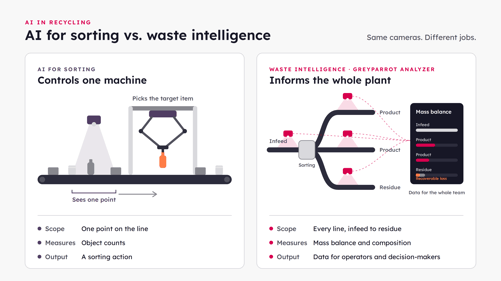
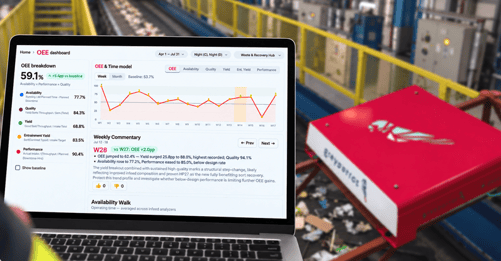
Since launching this report, waste intelligence technology has been adopted at recovery facilities around the world. In 2026, it’s a pillar of recovery facility operations, and may soon automate compliance reporting.

This year’s edition explores the use-cases that boosted revenue and recovery – with new case studies from global recovery facilities, and fresh perspectives from sector leaders in the USA, UK and EU. 

ebook (1)

Discover data from real recovery facilities, including:

chart-box-outline_magenta

£240,000

in savings after AI flagged the need for machinery adjustments.

bottle-soda-classic_magenta

£1.6 million

worth of valuable material lost to residue lines at one British PRF – every year.

factory_magenta

28%

of one MRF's residue stream was made up of valuable, easily recoverable material.

What you'll learn:

  • How to apply AI to individual waste streams, entire recovery facility operations, and group-level strategy.
  • How the cost and accuracy of AI-powered continuous monitoring compare to manual spot sampling. 
  • What real-world recovery facilities have learned from automated waste analysis.
  • What the industry’s leading innovators think about the future of AI waste analytics, automated compliance, dynamic control and more.

New for 2026:

  • New case studies from recovery facilities in the UK, EU and USA.
  • Updated progress on facility compliance automation from our pilot projects with UK leaders.
  • Updated perspectives from facility leaders across the USA, UK and EU. 

Get the full guide, for free

More data and expert insight, delivered to your inbox.

brian-popovich

"Over the next five years, the sites that stay ahead will be the ones built to adjust quickly. That means investing in new technology now, training people to use and understand data, and designing operations that can absorb change rather than be disrupted by it."

Brian Popovich

Senior Financial Analyst at USA Waste & Recycling

Camilla Stridsklev

"We’ve already learned that there’s huge potential to understand our production much better. Until now, we couldn’t measure processes in this level of detail. That data will help us make the right decisions about adjustments and investments, and document the entire process."

Camilla Stridsklev

Product Quality Manager at NG Nordic

Conor-McCooey (1)

"Previously, quality issues were flagged after things were baled and inspected, or from a customer complaint. We have an opportunity now to see that live on the line, and make corrections upstream in the plant, so we’re producing better quality, quicker."

Conor McCooey

Chief Information Officer at ReGen Waste

edmund-tenfelde (1)

"The future is clear: to further increase recycling rates, we need more insight and collaboration across the value chain.

AI can power fact-based and automated decision-making, providing recovery facilities with a much more accurate overview of their waste composition, and ultimately maximising their ROI."

Edmund Tenfelde

CEO at Bollegraaf

karin-wolters

"For us, adopting AI waste analytics was a way to get more process control. With continuous data on our material, I can maximise yields by tweaking processes in response: a little more airflow in our drum separator, or a bit of adjustment on the near-infrared system."

Karin Wolters

Process Engineer at Omrin

Let’s connect

We believe in the power of combined expertise. Whether you want to create a connected facility or build AI into your sorting machinery or software, we’d love to help.