
.jpg)
A fragmented reporting landscape
Across two days of panels and keynotes, speakers addressed the sheer complexity of extended producer responsibility (EPR) in the current European landscape.
In order to remain compliant across the EU, some enterprises are required to interface with over 200 different EPR schemes. The data required of brands, retailers and packaging producers is equally fragmented: an analysis of just 10 member states revealed 64 unique data fields required for reporting, with little overlap between jurisdictions.
As the European Commission prepares to enact Article 44 of the PPWR scheme – aimed at harmonising registration and reporting – the industry faces a transitional "data gap." As these fragmented reporting systems are integrated, brands will have to somehow guarantee that they are gathering data that meets the EU’s new requirements.
To move forward, CPG enterprises must transition from viewing post-consumption packaging data as a "compliance burden", to seeing it as an essential digital layer in the new circular economy.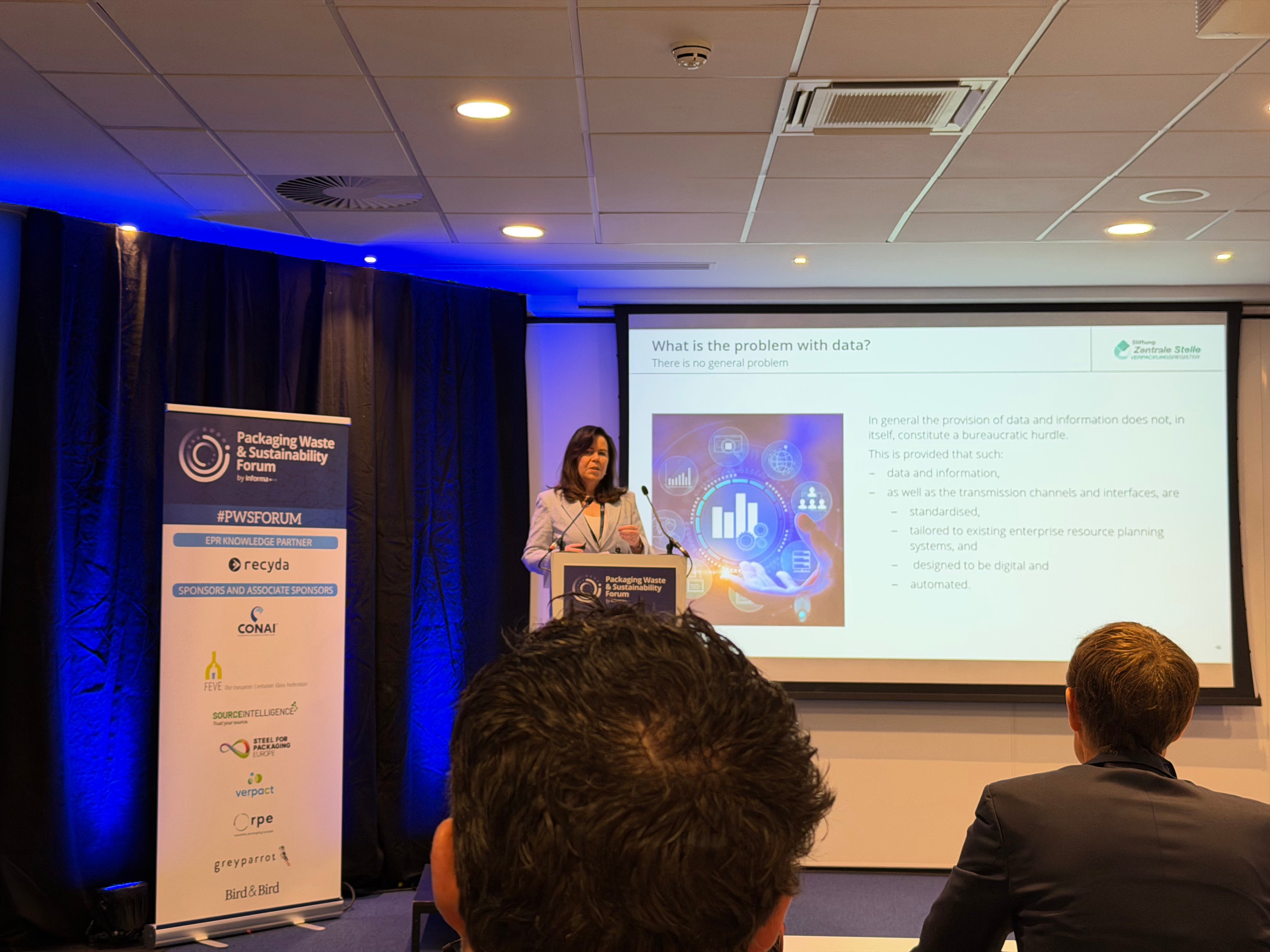
Designing for real-world recovery
We addressed the urgent need for unified data collection in our Forum keynote, while challenging CPG leaders to use new data requirements as an opportunity to shift their design focus. Instead of “designing for tomorrow”, CPGs should prioritise formats that align with today’s recycling infrastructure.
At the same time, there is an ongoing tension between branding and sorting efficiency. For many brands, packaging is the primary site of consumer engagement – but there is often a disconnect between marketing objectives and the performance of the package in a high-speed sorting facility.
Current best practices are not enough to help brands perform that balancing act. Academic "Design for Recycling" (DfR) guidelines are essential for long-term planning, but often describe hypothetical, idealised sorting environments. In reality, packaging success or failure is determined in the "messy" environment of active sorting facilities. It’s that real-world success that will be reflected in PPWR reports.
At Deepnest, we provide the visibility required to bridge this gap, using computer vision technology to analyse approximately 2 billion waste objects every day.
That analysis often reveals that technically-recyclable formats fail in practice. Two examples from the keynote highlight this misalignment between design intent and recycling reality:
-
While many aerosols are technically recyclable, certain packaging decisions are not compatible with existing infrastructure – which can lead to significant losses.
-
In markets like the UK, nearly a quarter of what is currently sent to landfill or incineration is actually fibre – a massive loss of value that highlights the logistical challenges of recycling at scale.
Many products are "compliant" on paper, but their physical characteristics (shape, weight, material or label composition) often mean the difference between effective sorting and loss.
The message to the CPG community was clear: by using real-world sortation data to drive design, they can move from guesswork to circular precision.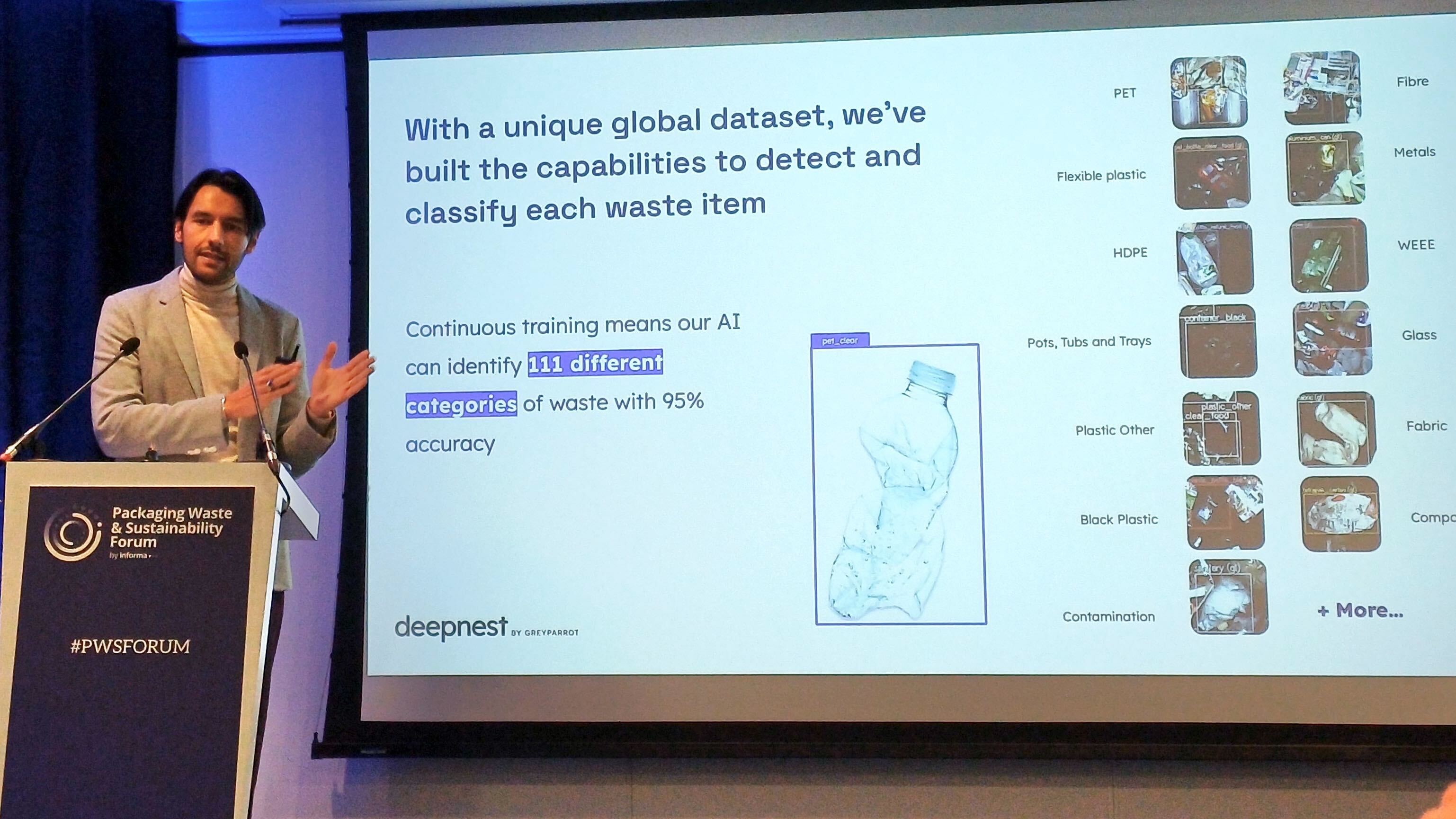
Eco-modulation accelerates transparency efforts
Designing for real recycling systems has become a competitive advantage thanks to the evolution of eco-modulation, which was another key topic of discussion in Brussels. Fee structures will evolve from broad averages effectively subsidising underperformers to targeted, performance-based fees.
As the system matures, modern CPG companies will seek to prove performance above the baseline. By tracking how specific products behave within the recovery ecosystem, brands can provide PROs with the granular evidence needed to justify tax rebates and lower fee brackets.
This has prompted a shift toward transparency and collective intelligence. Rather than seeking individual data points, the industry – represented by consortiums and beverage associations – is exploring shared data infrastructures that provide a "level playing field" for all participants, and clearer best practices for circular packaging design. 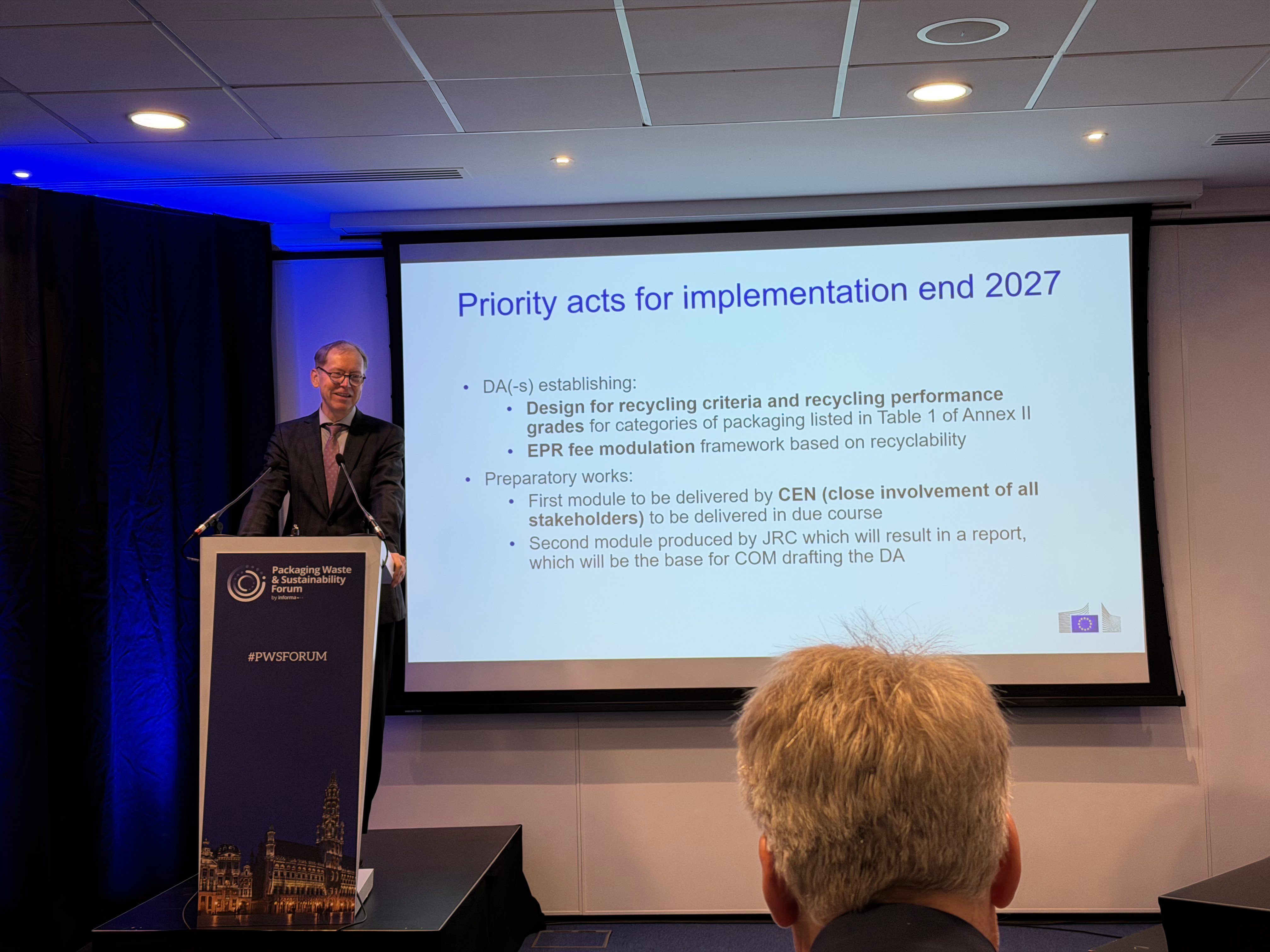
A collaborative path to Europe’s circular economy
As Dr. Wolfgang Trunk of the European Commission emphasized, the success of PPWR is a joint responsibility. Legislators are providing the framework, but the CPG industry must provide the innovation and the data for the system to have its intended effect.
The transition to a truly circular economy requires a commitment to three pillars:
-
Interoperability: Aligning reporting standards to reduce the administrative weight on SMEs and global enterprises alike.
- Practical design: Moving beyond lab tests to pilot projects that deliver real-world sorting success.
- Financial resilience: Leveraging detailed packaging waste data to optimise eco-modulation costs, and ensure that sustainability investments yield measurable ROI.
At Deepnest, we believe that the "messy" reality of waste management is not an obstacle, but an opportunity. By bringing transparency to the sorting floor, we empower brands to design with confidence, report with accuracy, and lead the transition to a more resilient, circular future.
About Deepnest
Deepnest provides the waste intelligence infrastructure necessary for CPGs to adapt to regulation like PPWR. Using advanced computer vision technology, we help global brands and PROs measure packaging’s true recoverability in real-world, actionable data.
About Deepnest
Deepnest provides the waste intelligence infrastructure necessary for CPGs to adapt to regulation like PPWR. Using advanced computer vision technology, we help global brands and PROs measure packaging’s true recoverability in real-world, actionable data.