
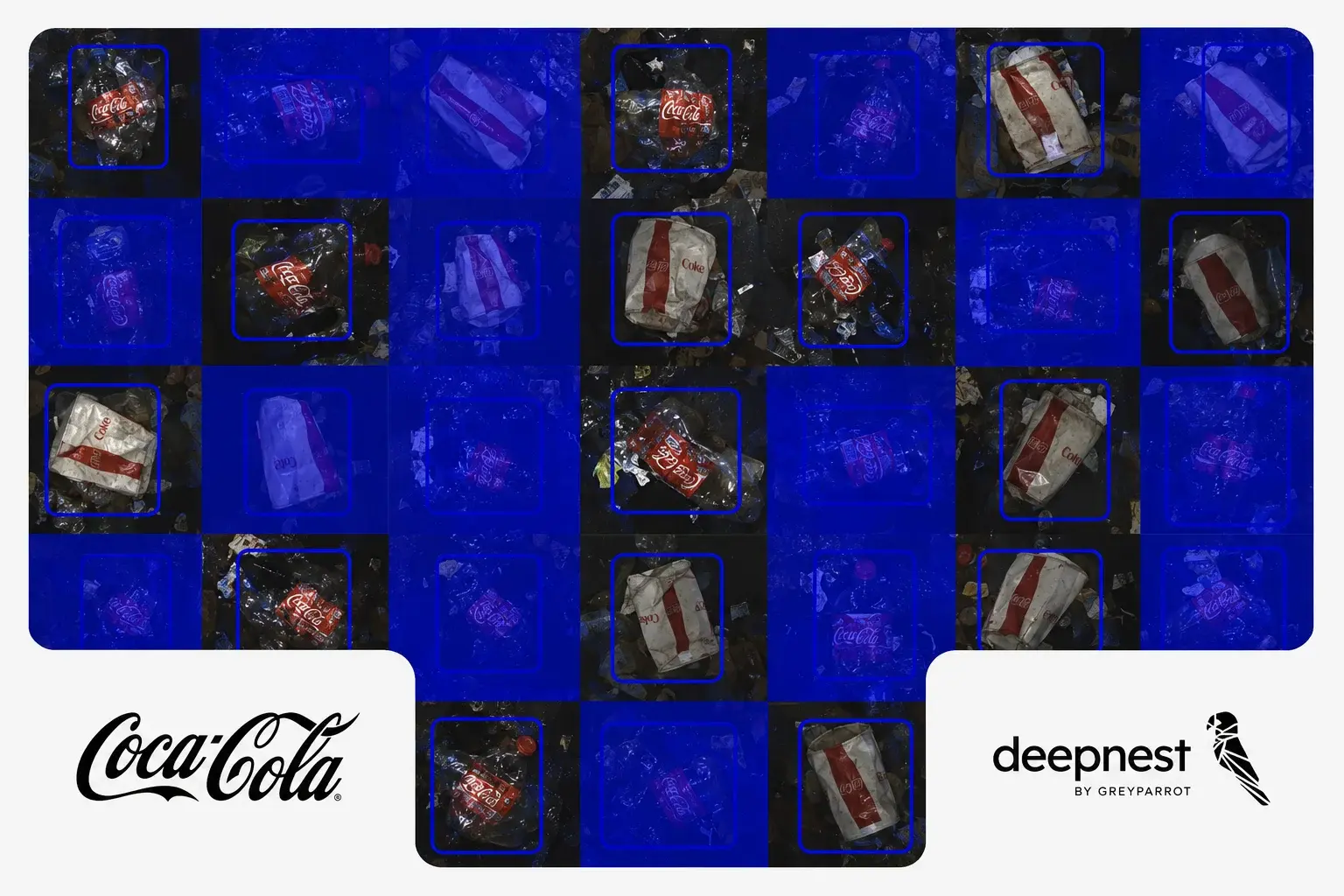
For decades, packaging recyclability has been assessed at the design stage - whether a material is theoretically capable of being recycled. What has not been systematically measured is what happens next: whether that material is actually sorted, recovered and kept in the value chain once it reaches a materials recovery facility (MRF), the plant where discarded material is sorted and prepared for recycling.
The Coca-Cola Company is working with Deepnest to measure how its packaging performs inside operating recovery facilities, using our packaging waste intelligence platform to replace industry-wide assumptions with real-world, statistically significant data on how packaging components are sorted and recovered. The collaboration gives Coca-Cola facility-level evidence to guide packaging design decisions.
This is a critical time for the company as extended producer responsibility (EPR) frameworks take hold across US states and global markets, fees and penalties are increasingly tied to verifiable recovery performance rather than design intent. Under eco-modulated EPR schemes, what a producer pays is linked to how recoverable its packaging is in practice. Brands that cannot demonstrate real-world recyclability face growing financial exposure.
"Data is only valuable if it changes a decision. Measuring how packaging actually performs inside a recycling facility tells a brand precisely what to adjust so that more of it is correctly sorted and recovered. The same changes that improve recovery also improve a brand's position under eco-modulated EPR fees. That lets companies act on the evidence now, ahead of those frameworks rather than in response to them."
Yaseed Chaumoo, managing director, Deepnest by Greyparrot
The Coca-Cola Company joins Kenvue, L'Oréal Groupe, Unilever and others working with Deepnest by Greyparrot to replace theoretical recyclability with verified recovery data. Across these collaborations, a consistent pattern is emerging: brands that have invested heavily in sustainable packaging design are finding that design intent and recovery reality are not the same thing, and that closing the gap requires data that has not, until now, existed.