
Paper cups are designed to be recycled. We followed them through the sorting line to see where they go.

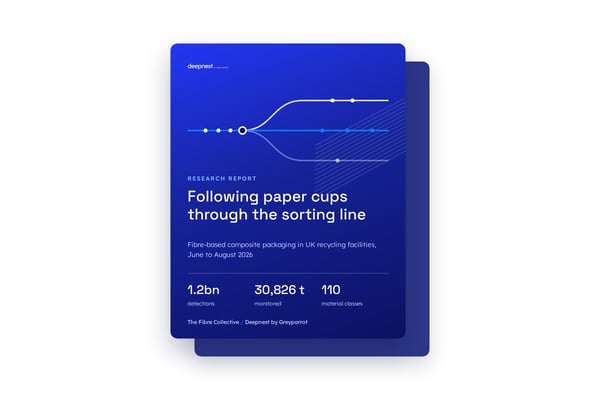
The first continuous, AI-measured study of fibre-based composite packaging in UK recycling facilities. 1.2 billion detections across three months and two materials recovery facilities show what happens between the bin and the paper mill.

fachrizal-maulana-0VRODNuBc70-unsplash (1)

What's inside

  • Where cups actually go. The route they take through the separators, and where they are recovered or lost.


  • How much composite packaging reaches the bale. Measured shares, with ranges for coatings and liners.


  • Counted, not just weighed. Why tonnes alone hide where value is lost.


  • From designed to observed recyclability. What sorting data can and can't tell us about EPR, the EU's PPWR and design-for-recycling decisions.


What the data reveals about fibre packaging at real-world scale

Fibre is replacing plastic across food and drink packaging, often with coatings, liners and composite constructions. Recyclability is usually judged on design and lab tests, but far less is known about how these formats behave inside a recycling facility.

To find out, The Fibre Collective and Deepnest by Greyparrot monitored nine fibre streams continuously for three months, from June to August 2026. The study covered 30,826 tonnes of material and 110 material classes. A shared taxonomy for fibre-based composites links what AI sees on the belt to what each format is made of.

The findings matter as UK EPR fees move towards modulation by recyclability and the EU's PPWR introduces recyclability performance grades. Join the waiting list to receive the report on publication.

Be first to read the report
deepnest-fibre-report-cover-white

The UK Composite Fibre Report is coming soon. Register and we'll send it to you on publication day.

Get early access

Be first to receive the UK Composite Fibre Report when it launches in early November.